What Is an LMS Courses and Exams Platform, and How Can It Grow Your Business?
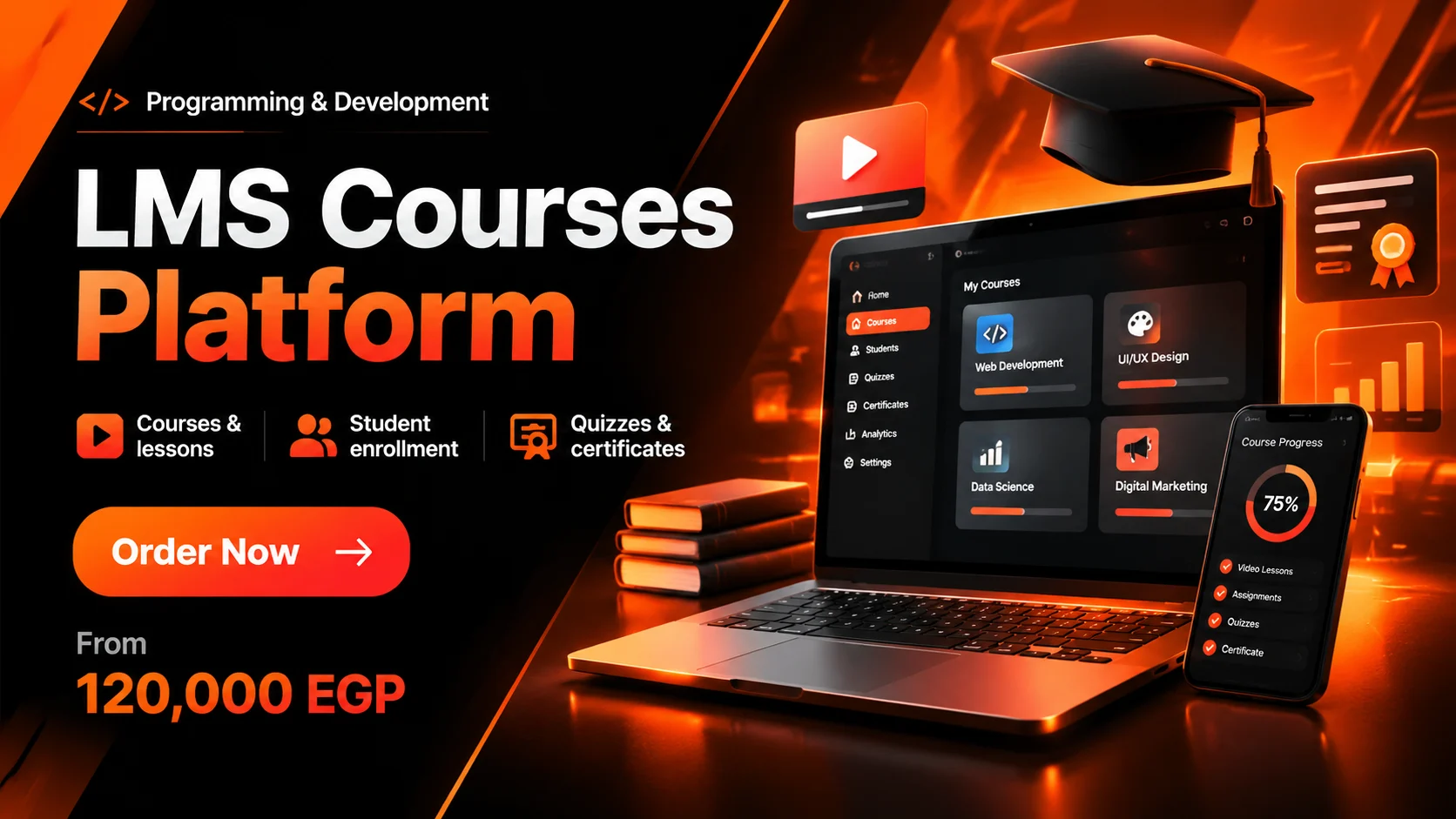
An LMS (Learning Management System) courses and exams platform is a centralized digital solution that enables businesses, training centers, educational institutions, and independent educators to deliver learning experiences, manage educational content, and evaluate learner performance online. Instead of relying on separate tools for course delivery, student registration, examinations, and progress reports, an integrated LMS brings these essential functions together in one organized environment. With STRONG, you can develop a customized e-learning platform designed around your business objectives, educational model, and long-term growth plans.
Whether you provide professional training, sell online courses, deliver employee development programs, or operate an educational organization, a well-developed LMS can transform the way you manage knowledge and engage your audience. It allows learners to access educational materials at their convenience while giving administrators and instructors the tools they need to organize courses, monitor participation, and evaluate results. By moving learning activities into a unified digital system, your organization can serve more learners, streamline daily operations, and create new opportunities for revenue generation.
STRONG develops LMS platforms that combine course management, online examinations, learner accounts, and performance tracking within a practical, user-friendly experience. Rather than forcing your organization to adapt to the limitations of a generic platform, a tailored solution can reflect your workflows, course structure, branding, access policies, and assessment requirements. This approach helps establish a reliable foundation for delivering educational services efficiently as your audience and content library expand.
What Can an Integrated LMS Platform Do for Your Organization?
An effective learning management system should support the complete learning process, not simply display videos or upload documents. STRONG focuses on connecting the essential functions that help your team deliver structured training and measure its effectiveness.
- Centralized course and assessment management: Build an integrated e-learning platform to manage courses, training content, learning materials, and online assessments through one central system. Organize lessons into modules, arrange learning resources logically, and create examinations that align with your educational objectives.
- Dedicated accounts and access permissions: Provide separate accounts and appropriate permissions for administrators, instructors, and learners. Each user receives access to the tools and information relevant to their responsibilities through an intuitive experience designed to work across desktop computers, tablets, and smartphones.
- End-to-end learning journey management: Organize the entire process, from user registration and course enrollment to progress tracking, assessment results, and certificate issuance. This connected workflow reduces manual administration and gives learners a clearer understanding of their achievements and next steps.
These capabilities also help organizations maintain greater consistency across courses and training programs. Administrators can manage learning activities from a central dashboard, instructors can focus on delivering quality educational content, and learners can follow their progress without navigating disconnected systems. Depending on your requirements, the platform can also be designed to accommodate paid courses, specialized training paths, automated assessments, and reporting tools that support informed decisions.
The business value of an LMS extends beyond digitizing education. It creates a scalable foundation for delivering knowledge, improving operational efficiency, strengthening learner engagement, and expanding your services without requiring every additional learner to increase your administrative workload proportionally. With STRONG's programming and development expertise, your organization can turn its training model into a structured digital service built to support sustainable growth.
Core Deliverables and Features of the LMS and Online Examination Platform
A powerful Learning Management System (LMS) should do more than host educational content. It should provide a complete environment where administrators organize courses, instructors deliver training, learners follow structured learning paths, and managers evaluate educational outcomes. STRONG develops customized LMS courses and exams platforms that bring these essential capabilities together in one integrated system, helping businesses, training centers, educational institutions, and independent educators manage their learning operations efficiently.
1. Comprehensive Course Management Dashboard
The platform includes a centralized course management dashboard that allows administrators and instructors to create, organize, update, and publish educational content without relying on disconnected tools. Courses can be arranged into categories, learning modules, lessons, and structured learning paths, making educational resources easier to manage and navigate. Depending on project requirements, supported content can include recorded videos, downloadable documents, presentations, reading materials, and other training resources. Administrators can control course visibility, organize content by subject or level, and maintain consistent educational structures as their libraries expand.
- Course organization: Create and categorize courses according to topics, programs, departments, or skill levels.
- Learning materials: Manage videos, documents, lesson resources, and supplementary training files in one place.
- Content updates: Modify lessons, rearrange modules, and maintain course information as requirements change.
2. Online Examination and Automated Assessment System
STRONG can integrate an online examination system that enables educators to assess learners directly through the platform. Instructors can build question banks, prepare assessments, configure examination rules, and review results through a unified interface. Depending on the required functionality, supported question formats may include multiple-choice questions, true-or-false questions, short answers, and other assessment types. Time limits can help structure examinations, while automated grading can evaluate supported objective questions and reduce repetitive administrative work. Score tracking gives learners and administrators a clearer view of assessment outcomes and helps identify areas requiring additional attention.
- Flexible assessments: Configure quizzes, practice tests, and formal examinations for different courses.
- Question banks: Organize reusable questions by topic, difficulty, or learning objective.
- Results management: Record scores, review learner performance, and support consistent assessment workflows.
3. User Management, Enrollment, and Learning Progress Reports
An effective LMS must support the complete learner journey, from registration to course completion. The platform can include user registration, profile management, role-based permissions, course enrollment, and administrative controls for managing students, instructors, and staff. Where required, payment integration can enable paid course access, while attendance tracking helps organizations monitor participation in scheduled learning activities. Progress reports can show course completion, assessment scores, and learner activity, giving administrators practical information for evaluating training effectiveness. Digital certificates can also be generated for eligible learners who meet predefined completion or assessment requirements.
- Enrollment management: Organize learners and assign access to relevant courses or training programs.
- Progress and attendance: Monitor participation, course completion, and assessment performance through reports.
- Payments and certificates: Add optional payment processing and certificate issuance according to business rules.
These core deliverables can be adapted to your organization's workflows, audience size, branding, and operational goals. STRONG focuses on building an LMS and online examination platform that combines usability, reliable administration, and room for future expansion, allowing your learning services to evolve as your courses, users, and assessment requirements grow.
Technology Stack and Software Architecture for a Scalable E-Learning Platform
Building a reliable Learning Management System (LMS) requires a technology stack that supports interactive learning, secure examinations, efficient content delivery, and long-term scalability. At STRONG, we select technologies based on your business objectives, educational requirements, content formats, integration needs, and expected user volume. Rather than applying the same technical solution to every project, we design an architecture that balances performance, maintainability, flexibility, and development costs.
Frontend Technologies and Responsive User Experiences
The frontend determines how learners, instructors, administrators, and training managers interact with your platform. We use modern web technologies and responsive development practices to create accessible interfaces that work consistently across desktops, tablets, and mobile devices. Depending on project requirements, the frontend may use React, Next.js, Vue.js, or comparable frameworks. We organize course catalogs, lesson viewers, examination interfaces, progress dashboards, and account management tools around clear navigation and efficient user workflows. Responsive layouts help learners access educational materials from different devices, while optimized rendering and resource loading contribute to a smoother learning experience.
Backend Technologies and Application Architecture
The backend coordinates essential LMS operations, including user registration, enrollment, course management, examination delivery, grading, reporting, and notifications. We select an appropriate backend framework, such as Node.js, Laravel, or Django, according to the platform's complexity, team requirements, integration needs, and anticipated traffic. Well-structured APIs connect frontend components with business logic and external services. Where appropriate, modular architecture separates major functions, making it easier to maintain existing features, introduce new learning tools, and expand the platform without unnecessarily rebuilding its foundation.
Database Design and Content Management
Database selection depends on the structure, relationships, and volume of your learning data. Relational databases such as PostgreSQL or MySQL can support structured records for learners, courses, enrollments, exam attempts, and results. Other STRONG technologies may be appropriate for specific workloads or specialized requirements. We also consider dedicated file STRONG and content delivery solutions for videos, documents, downloadable resources, and other learning materials. Database indexing, efficient queries, caching where appropriate, and well-planned data relationships help maintain responsive performance as course libraries and learner activity grow.
Integrations, Security, and Learning Standards
- Payment and communication APIs: Integrate suitable payment gateways, transactional email services, reminders, and virtual meeting tools to support enrollment, subscriptions, learner communications, and live training sessions.
- Authentication and permissions: Implement secure sign-in, role-based access controls, appropriate session management, and permissions that distinguish learners, instructors, administrators, and other authorized users.
- Data protection and backups: Apply encrypted connections, appropriate protection for stored information, validated inputs, secure configuration, and scheduled backups with recovery procedures suited to business requirements.
- Learning content compatibility: Support relevant standards such as SCORM or xAPI when required, subject to the selected implementation and content requirements, to improve compatibility with existing learning materials and tracking workflows.
Architecture Designed for Future Growth
Scalability begins with informed architectural decisions, not simply adding server capacity after performance problems appear. STRONG considers expected concurrent learners, examination traffic, video delivery demands, administrative workloads, and future feature expansion during technical planning. Depending on the project's needs, we can incorporate caching, background processing, monitoring, and cloud infrastructure to improve resilience and resource efficiency. The result is a maintainable LMS foundation designed to support growing course libraries, increasing learner numbers, evolving integrations, and new educational services while keeping security and operational reliability central to the development process.
LMS Development Phases: From Requirements and Design to Launch
Developing a successful LMS courses and exams platform requires a structured process that connects business objectives, learner needs, technical requirements, and long-term growth. At STRONG, we approach LMS development as a sequence of coordinated phases, ensuring that every feature serves a clear purpose and supports an effective digital learning experience. From initial planning to deployment and ongoing support, each stage is designed to reduce implementation risks, improve usability, and create a reliable platform that can evolve with your organization.
Phase 1: Requirements Analysis and Platform Planning
The first phase establishes the foundation of the project. Our team works to understand your training model, target audience, operational processes, and expected outcomes before defining the platform's structure. This includes identifying the different user roles, such as administrators, instructors, students, and evaluators, along with the permissions and responsibilities assigned to each role. We also map learning journeys, from registration and course enrollment to content completion, examination, grading, and certification where required. Reporting requirements are documented to determine which performance indicators and administrative insights the platform must provide. If your business depends on external tools, we identify relevant third-party integrations, such as payment gateways, communication services, identity providers, or existing business systems. This planning stage produces a practical development roadmap aligned with your priorities, budget, and expected scale.
Phase 2: User Experience Design and Core Development
Once the requirements are approved, we translate the project plan into an intuitive user experience and a functional technical architecture. Interface design focuses on clear navigation, accessible layouts, responsive screens, and straightforward workflows for every user category. The development process then brings the essential platform modules together in a unified environment, including:
- Course management: Organize courses, lessons, learning materials, categories, enrollment rules, and instructor assignments.
- Registration and user accounts: Support account creation, authentication, role-based permissions, and course access management.
- Content delivery: Provide structured access to educational resources, recorded lessons, downloadable materials, and learning progress indicators.
- Examination and assessment: Configure quizzes, question banks, assessment rules, grading workflows, and result management according to project requirements.
- Dashboards and reporting: Give learners, instructors, and administrators relevant information about progress, results, participation, and operational performance.
Throughout development, we review module compatibility and workflow consistency to ensure that course delivery, assessment, and reporting operate as parts of one integrated system rather than disconnected features.
Phase 3: Testing, Deployment, and Continuous Support
Before launch, STRONG conducts structured testing to verify functionality, security controls, browser and device compatibility, and performance under expected workloads. We validate important user journeys, including enrollment, lesson access, examination submission, result calculation, and administrative reporting. Identified issues are prioritized and resolved before production deployment. The launch phase includes environment configuration, data migration when applicable, final checks, and platform handover. We also provide platform training to help administrators and instructors manage daily operations confidently. After launch, monitoring helps identify technical issues and performance concerns, while ongoing technical support assists with troubleshooting, maintenance, and future improvements. This phased approach gives your organization a clear path from initial requirements to a dependable LMS platform that supports effective online courses, assessments, and sustainable business growth.
SEO, Performance Optimization, and Security for Your E-Learning Platform
A successful learning management system needs more than useful courses and reliable examination tools. It must also be discoverable through search engines, respond quickly across devices, and protect the information entrusted to it by learners and administrators. STRONG develops LMS courses and exams platforms with these priorities in mind, helping businesses and educational organizations create a dependable foundation for growth. By addressing search engine optimization, technical performance, and security during development, we help reduce operational friction and create a better learning experience as your platform evolves.
SEO Optimization for Courses and Educational Resources
Your public course pages can attract potential learners who are actively searching for specific training programs, professional skills, or educational resources. STRONG structures these pages to make their content easier for search engines to understand and for visitors to navigate. We focus on clear page hierarchies, descriptive headings, relevant metadata, and logical URLs that reflect the subject of each course. Educational resources and supporting articles can also be organized to strengthen topical relevance and improve the overall discovery experience.
- Optimize public course pages and educational resources with clear headings, structured URLs, and relevant metadata.
- Organize course categories and internal links to help visitors discover related learning opportunities.
- Apply appropriate technical SEO practices, including crawlable public pages and mobile-friendly layouts, while respecting access restrictions for private learning content.
These improvements support organic visibility without compromising the platform's usability. Where appropriate, the implementation can also include XML sitemaps, canonical URLs, and structured data that accurately reflects eligible public content.
Performance Optimization as Enrollment Grows
Slow page loads, delayed quiz responses, and interruptions during video lessons can discourage learners and increase support requests. STRONG addresses performance throughout the platform, considering both everyday browsing and periods of concentrated activity, such as enrollment campaigns, live training sessions, and scheduled examinations. Optimization begins with identifying bottlenecks and applying practical improvements to the application, database, and hosting environment.
- Improve loading speed through media compression, caching, efficient database queries, and scalable infrastructure as learner numbers grow.
- Optimize images, scripts, and other front-end resources to reduce unnecessary loading delays on desktop and mobile devices.
- Review resource consumption and critical workflows to help maintain responsive course navigation, progress tracking, and assessment delivery.
Infrastructure choices can be aligned with expected enrollment, content volume, and traffic patterns, allowing the platform to expand without requiring an unnecessary redesign. Performance testing helps identify potential limitations before they affect a larger audience.
Security, Privacy, and Operational Reliability
An LMS may contain personal learner details, training records, examination results, payment-related information, and restricted educational materials. Protecting this information requires coordinated safeguards across authentication, permissions, data STRONG, and system operations. STRONG applies security practices appropriate to the platform's requirements and the sensitivity of its data.
- Protect accounts, learner data, and examinations with appropriate access controls, encryption, backups, and error monitoring.
- Apply role-based permissions to separate learner, instructor, and administrator capabilities and limit unauthorized access.
- Use secure communication, dependency updates, and appropriate session-management practices to reduce common application risks.
- Establish backup and recovery procedures and monitor application errors to support troubleshooting and service continuity.
Security requirements are considered alongside usability, helping authorized users access the functions they need without exposing restricted information. STRONG can tailor these measures to your operating model, integration requirements, and applicable privacy obligations. The result is an LMS designed to support discoverability, responsive learning experiences, and responsible data management as your educational business grows.
Who Needs an LMS Courses Platform? Start Your Project with STRONG
A custom Learning Management System (LMS) can help organizations turn educational content into structured, accessible, and scalable digital learning experiences. Whether you want to train employees, teach students, sell professional courses, or deliver certification programs, the right platform can simplify administration while creating a more engaging experience for learners. STRONG develops LMS courses and exams platforms tailored to your business model, educational objectives, and operational requirements, helping you establish a foundation for long-term digital growth.
Our LMS development services are ideal for:
- Training academies and educational centers: Manage multiple courses, organize learning materials, enroll students, schedule assessments, and monitor learner progress through a centralized platform. A dedicated LMS can help your team deliver consistent training programs while reducing repetitive administrative work.
- Schools, colleges, and universities: Support online learning, distribute educational resources, organize assignments, conduct examinations, and track academic performance. A platform designed around your institution's needs can complement classroom teaching and provide students with convenient access to learning resources.
- Businesses and corporate training departments: Deliver employee onboarding, internal training, compliance education, and professional development programs in one environment. Managers can organize learning paths, evaluate results, and identify training needs while providing employees with flexible access to relevant content.
- Independent instructors and educational content creators: Turn your expertise into organized online courses with learner accounts, structured lessons, progress tracking, and assessment options. A dedicated platform gives you greater control over how your content is presented and how students interact with your educational products.
- Professional certification providers: Create structured preparation programs, administer knowledge tests, evaluate candidates, and support certification workflows. Depending on your requirements, the platform can incorporate examination rules, result management, and certificate issuance features.
- Paid online course businesses: Build an educational business around premium content, paid enrollment, and repeat customer relationships. Suitable integrations can support payment processing, subscription models, and access control for different courses or membership levels.
Why choose STRONG for your LMS project? Every educational business has different priorities, from launching a focused course catalog to supporting thousands of learners across multiple programs. STRONG approaches development with these differences in mind, helping you define the features, integrations, user roles, and technical foundations that make sense for your objectives. We can help you prioritize essential functionality for your initial launch while planning for future additions as your audience and course offerings expand.
Start your LMS development project with STRONG. Contact our team to discuss your educational concept, target audience, preferred features, expected user volume, and available budget. We will help translate your requirements into a practical development direction aligned with your goals and growth plans. Whether you need a platform for courses and exams, an internal corporate learning system, or a commercial e-learning business, STRONG can help you plan a solution that fits your needs. Share your vision with us and take the next step toward building a professional online learning platform designed around your business.