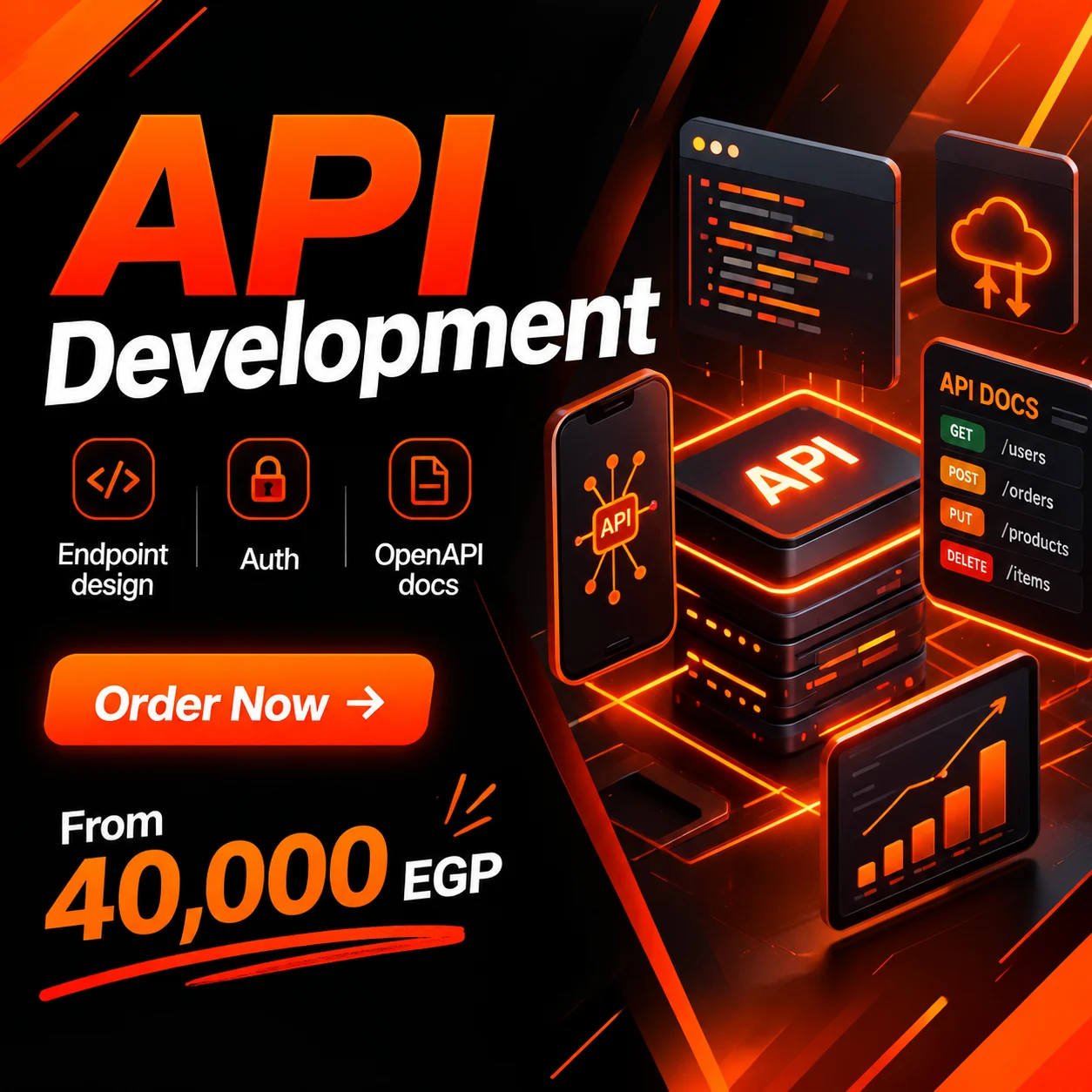
API Development to Connect Systems and Expand Business Capabilities
Modern businesses rely on multiple digital platforms, applications, and internal systems to deliver efficient services and maintain consistent operations. When these systems operate independently, exchanging information can become complicated, workflows may require unnecessary manual effort, and introducing new digital capabilities can demand significant development time. STRONG provides API development services that help businesses connect their digital infrastructure, streamline data exchange, and build a reliable foundation for future growth. Our approach focuses on designing application programming interfaces that allow websites, mobile applications, internal software, databases, and third-party services to communicate through clearly defined rules and secure data access.
An application programming interface, or API, enables different software components to exchange information and perform specific operations without requiring direct access to one another's internal implementation. With a well-designed API, businesses can integrate existing platforms, introduce new services, automate repetitive processes, and create more connected digital experiences. STRONG develops APIs around your operational requirements, technical environment, and long-term objectives, helping you establish integrations that support practical business outcomes rather than adding unnecessary complexity.
Our API development service covers three essential areas:
- Efficient system communication: We design and build APIs that enable reliable data exchange between websites, web applications, mobile applications, internal business systems, and third-party services. This connectivity helps reduce information silos, improve workflow coordination, and maintain more consistent data across connected platforms.
- Architecture suited to your project: We evaluate the technical and functional requirements of your solution to determine whether REST, GraphQL, or another suitable API technology provides the right foundation. The selection considers factors such as data access patterns, integration complexity, performance expectations, scalability, and compatibility with existing systems.
- Flexible and secure integration: We establish a technical foundation designed to accommodate changing business requirements while protecting sensitive information. Appropriate authentication, authorization, input validation, error handling, and access controls help ensure that connected systems exchange information according to defined permissions and operational rules.
Every business has different integration requirements. An e-commerce company may need to connect its online store with inventory management, payment processing, shipping providers, and customer relationship management software. A service-based organization may need to synchronize customer records, connect booking applications, or exchange information between internal dashboards and external platforms. STRONG approaches each project by identifying the systems involved, the information they need to exchange, and the workflows the integration should support.
The result is an API solution designed to make your digital environment more connected, manageable, and adaptable. By establishing clear communication standards and a maintainable integration architecture, STRONG helps businesses extend existing software capabilities, reduce integration friction, and prepare their technology infrastructure for future expansion. Whether you are launching a new application or connecting established platforms, our API development service provides a structured path toward more efficient digital operations.
Deliverables Included in API Development
STRONG delivers API development solutions designed to help businesses connect applications, exchange information reliably, and extend the capabilities of their digital platforms. Each API is developed around defined business requirements, integration needs, and expected usage patterns, providing a structured foundation for communication between websites, mobile applications, databases, third-party services, and internal business systems. Our deliverables focus on practical functionality, maintainability, security, and clear technical guidance so your team can integrate and manage the solution with confidence.
Well-Structured API Endpoints and Operations
We build organized API endpoints that define how applications access and manage data. Each endpoint follows a consistent structure and supports the operations required by your project, making integrations easier to implement, test, and maintain. Depending on the business workflow, the API can support retrieving records, creating new entries, updating existing information, and deleting data when authorized. We establish appropriate request methods, parameters, response formats, and data structures to promote predictable communication between connected systems.
- Clearly defined endpoints aligned with application features and business processes.
- Structured operations for retrieving, creating, updating, and deleting data according to project requirements.
- Consistent response formats and resource organization to simplify integration with frontend applications and external platforms.
- Flexible endpoint design that supports future functionality and evolving integration requirements.
Authentication, Authorization, and Request Validation
Security is incorporated into the API architecture to help protect business information and prevent unauthorized access. STRONG implements authentication and authorization mechanisms appropriate to the application, ensuring that requests can be verified and access permissions can be enforced. Input validation helps identify missing, malformed, or unexpected data before processing, while structured error handling provides consistent responses when requests fail. Where appropriate, request rate limiting helps reduce excessive traffic and protect services from abusive usage patterns.
- Authentication and access controls suited to the integration environment.
- Input validation and consistent error responses to improve reliability and troubleshooting.
- Request rate limiting and related safeguards based on project requirements.
- Security-conscious handling of sensitive information and restricted operations.
Technical Documentation and Integration Testing
Every API should be understandable to the developers who integrate, maintain, or extend it. We provide technical documentation describing available endpoints, supported parameters, expected request formats, response structures, authentication requirements, and practical usage examples. This documentation helps development teams understand how to connect their applications without relying on unnecessary guesswork. Testing complements the documentation by verifying expected behavior, validating responses, and checking how connected components interact under defined conditions.
- Endpoint references covering parameters, request methods, responses, and access requirements.
- Practical examples that help developers implement API requests correctly.
- Integration tests that verify communication between connected components and identify potential failures.
- Clear error scenarios and testing guidance to support ongoing maintenance.
With these deliverables, STRONG provides more than a functional connection between systems. We create a documented, testable, and security-conscious API foundation that supports dependable integrations today while making future improvements easier to plan and implement.
Technologies and Tools Used for API Development
Building a reliable API requires more than writing endpoints and connecting applications. The technology stack must support your business objectives, handle expected workloads, protect sensitive information, and remain flexible as your digital infrastructure evolves. At STRONG, we select development technologies and supporting tools according to your project's requirements, existing architecture, integration needs, and long-term maintenance goals. This approach helps create APIs that deliver consistent performance without introducing unnecessary complexity.
Backend technologies selected for your requirements
The backend framework determines how requests are processed, business logic is implemented, and external systems communicate with your services. STRONG evaluates the technical demands of your project before selecting the most appropriate programming language and development environment. Our selection considers response times, expected traffic, team familiarity, integration requirements, and the availability of suitable libraries.
- Node.js: Suitable for event-driven applications, real-time communication, and APIs that manage numerous concurrent requests.
- Python: A practical option for rapid development, data processing, automation, and integrations involving analytics or machine learning services.
- PHP: Effective for web applications, content management platforms, and existing business systems that benefit from straightforward server-side integration.
- Java: A strong candidate for enterprise environments requiring structured architecture, mature tooling, and support for complex business operations.
Rather than choosing a technology simply because it is popular, we align the backend stack with your performance targets, deployment environment, and current software ecosystem. This helps reduce integration friction and supports future enhancements.
Database integration and efficient data management
APIs frequently need to retrieve, update, validate, and exchange information across multiple applications. STRONG integrates relational or non-relational databases according to the structure and behavior of your data. PostgreSQL can support structured records, relationships, and transactional operations, while MongoDB can suit document-oriented data models that require flexibility.
Our development process considers data modeling, indexing, query optimization, validation, and transaction handling where appropriate. We also assess pagination, connection management, and caching opportunities to avoid unnecessary database operations. These decisions help APIs remain responsive as data volumes and usage demands increase, while maintaining data consistency and supporting reliable business workflows.
Security, communication, and API documentation
Secure communication is an essential part of production-ready API development. STRONG implements HTTPS to protect data in transit and selects suitable authentication and authorization mechanisms based on the application's security requirements. Depending on the use case, these may include API keys, token-based authentication, or OAuth-based authorization. Additional safeguards can include input validation, rate limiting, controlled access permissions, and secure handling of credentials.
We also use OpenAPI or comparable documentation tools to describe endpoints, request parameters, response formats, authentication requirements, and error behavior. Clear documentation makes it easier for developers to integrate with your API, test expected responses, and maintain connected applications as services evolve. By combining appropriate backend technologies, efficient database design, security controls, and practical documentation, STRONG builds APIs that are easier to integrate, operate, and extend as your business grows.
API Development Phases from Discovery to Launch
Successful API development requires a structured process that connects business objectives with technical requirements, reliable implementation, and long-term operational needs. At STRONG, we approach each API project through clearly defined phases, ensuring that the resulting interface supports the intended workflows, integrates with existing systems, and provides a dependable foundation for future growth. From initial analysis to production deployment, every stage focuses on reducing integration risks, maintaining data integrity, and delivering an API that is practical to use, secure, and maintainable.
Phase 1: Requirements Analysis and Integration Planning
We begin by understanding how your business operates, which systems need to communicate, and what information must move between them. This discovery stage helps establish the technical scope and priorities before implementation begins. Our team identifies API consumers, including websites, mobile applications, internal platforms, and approved third-party services, while examining their specific requirements.
- Analyze integration requirements, existing infrastructure, and essential business use cases.
- Identify API consumers, required data types, access permissions, and authentication needs.
- Define functional requirements, expected traffic, operational constraints, and measurable success criteria.
- Document dependencies and potential integration challenges to establish a practical development plan.
Phase 2: API Architecture and Development
Once the requirements are established, we design an API architecture that reflects the project's complexity, performance expectations, and integration environment. This includes defining endpoints, request and response formats, data models, error handling, and communication standards. Depending on the project, the implementation may follow REST principles or another suitable approach. STRONG then develops the required functionality and connects the API to relevant databases, business applications, and external services, keeping the solution aligned with the agreed specifications.
- Design clear endpoints, consistent data structures, and predictable response formats.
- Implement business logic, validation rules, authentication, and authorization controls.
- Connect databases and services while preserving data consistency and appropriate access boundaries.
- Organize the code for maintainability, future enhancements, and integration with additional systems.
Phase 3: Testing, Documentation, and Deployment Preparation
Before launch, we verify that the API behaves correctly across expected scenarios and remains dependable under realistic workloads. Testing covers endpoint functionality, invalid inputs, error responses, permission boundaries, and performance under different request volumes. Security checks help identify weaknesses that could expose sensitive information or allow unauthorized operations. We also prepare technical documentation and deployment environments so developers and administrators can understand how to configure, consume, and maintain the interface.
Phase 4: Launch, Monitoring, and Continuous Improvement
After validation, the API is deployed to the appropriate production environment using a rollout approach suited to your operational requirements. We check connectivity, configuration, logging, and essential workflows after release. Monitoring helps identify errors, unusual response times, and emerging reliability issues, while feedback from API consumers informs subsequent refinements. STRONG can also support post-launch adjustments, performance optimization, and planned enhancements as your integration needs evolve.
This phased approach provides visibility throughout the project and helps businesses make informed decisions at every milestone. By combining careful planning, disciplined implementation, thorough testing, and ongoing evaluation, STRONG delivers API solutions designed to support dependable integrations today while accommodating new applications, services, and business requirements in the future.
Improving API Performance, Security, and Scalability
A reliable API must do more than connect applications and exchange information. It must deliver consistent performance, protect sensitive business data, and remain flexible as operational demands evolve. STRONG focuses on these essential qualities during API development, helping businesses establish interfaces that support efficient transactions, dependable integrations, and long-term digital growth. By addressing performance, security, and maintainability together, we help reduce technical bottlenecks and create APIs that remain practical to operate as systems and user expectations change.
API Performance Optimization
Slow API responses can affect customer satisfaction, interrupt automated workflows, and place unnecessary pressure on application infrastructure. STRONG evaluates how requests are processed and identifies opportunities to improve response times without compromising data accuracy or system reliability. Our optimization approach considers database operations, response payloads, caching opportunities, and the overall efficiency of communication between connected services.
- Reduce response times by optimizing database queries, applying caching where appropriate, and avoiding unnecessary data in responses.
- Review frequently accessed resources and repetitive operations to identify practical opportunities for reducing processing overhead.
- Evaluate response consistency under different workloads to help identify bottlenecks before they affect critical business operations.
Security and Controlled Access
API security is essential whenever applications exchange customer information, business records, authentication credentials, or other sensitive data. STRONG incorporates appropriate safeguards into API design and implementation, taking into account the sensitivity of the information, the intended users, and the requirements of connected systems. Security controls are selected according to the integration environment rather than relying on a single protective measure.
- Strengthen security through input validation, access controls, request rate limiting, and meaningful event logging without exposing sensitive information.
- Apply suitable authentication and authorization mechanisms to ensure that users and connected applications can access only permitted resources.
- Handle errors carefully to avoid disclosing internal implementation details, credentials, or confidential data through API responses.
Scalability and Long-Term Maintainability
As a business introduces new applications, adds integration partners, or increases request volumes, its API infrastructure must adapt without creating unnecessary complexity. STRONG develops APIs with clear structures and maintainable implementation practices, making it easier to introduce improvements while preserving compatibility with existing consumers. We also consider how teams will test, monitor, document, and maintain the interface after deployment.
- Improve maintainability and future compatibility through version management, integration testing, error monitoring, and documentation of significant changes.
- Use consistent response structures and predictable error handling to simplify troubleshooting and reduce integration friction.
- Plan API versioning and change management to minimize disruption when endpoints, data structures, or business requirements evolve.
Continuous Reliability Through Testing and Monitoring
Performance and security require ongoing attention as usage patterns and connected systems change. STRONG supports this process through appropriate testing, monitoring practices, and technical documentation that help teams understand how an API behaves in real operating conditions. Integration tests can verify that connected services continue exchanging information correctly, while error monitoring helps reveal recurring failures and unexpected behavior. Clear documentation also gives developers a practical reference for endpoints, parameters, authentication requirements, and changes.
By combining efficient request processing, carefully implemented security controls, and structured maintenance practices, STRONG helps businesses build APIs that support dependable digital operations. The result is an integration foundation designed to accommodate evolving requirements, protect essential information, and make future development more manageable.
Who API Development Is For and How to Get Started with STRONG
API development is valuable for businesses that want to connect digital services, improve operational efficiency, and create more flexible software solutions. Whether you are launching a new product or upgrading an established technology infrastructure, a well-designed API can help your systems communicate reliably and support your long-term business objectives. STRONG works with organizations at different stages of digital growth, helping them identify integration opportunities and define practical development solutions that align with their technical requirements.
Startups and growing businesses can use API development to build scalable digital products without creating every feature from scratch. APIs allow startups to connect payment gateways, authentication services, analytics platforms, customer management tools, and other essential technologies. This approach can accelerate product development, reduce duplicated work, and provide a flexible foundation for introducing new capabilities as customer needs evolve.
E-commerce businesses and digital platforms can benefit from APIs that connect online stores with inventory systems, shipping providers, payment services, customer databases, and marketing platforms. Structured data exchange helps maintain consistent information across connected applications, reduces repetitive administrative tasks, and supports smoother customer experiences. For marketplaces and service platforms, APIs can also facilitate communication between different user interfaces, backend services, and third-party providers.
Enterprises and software development teams may require APIs to connect legacy applications with modern systems, coordinate internal processes, or make business information available across departments. Web and mobile development teams can use APIs to retrieve and update data through consistent interfaces, while software-as-a-service providers can use them to deliver integrations, support customer workflows, and extend product functionality. Organizations collaborating with external partners can also benefit from clearly defined API contracts that establish how information is exchanged and which operations are permitted.
To determine whether API development is the right solution for your organization, STRONG begins by understanding your current environment and intended outcomes. You do not need a complete technical specification before starting the conversation. A clear description of your business challenge, the systems involved, and the result you want to achieve provides a useful starting point.
To get started with STRONG, prepare the following information where available:
- Integration goals: Explain which applications need to communicate, what information should move between them, and which manual processes you want to improve.
- Existing systems: Identify your websites, mobile applications, databases, business software, and third-party services, including any existing APIs or technical documentation.
- Security requirements: Describe access restrictions, authentication expectations, sensitive data considerations, and any relevant compliance obligations.
- Project scope: Outline your essential features, expected usage, business priorities, and preferred implementation timeline.
Based on these details, STRONG can help establish an appropriate technical approach, define the project scope, and identify the integration methods that best fit your requirements. The resulting plan can address functionality, compatibility, security, testing, and future maintenance from the beginning. Contact STRONG to discuss your API development project and explore how a purpose-built integration can help your business connect systems, simplify workflows, and prepare for future digital opportunities.